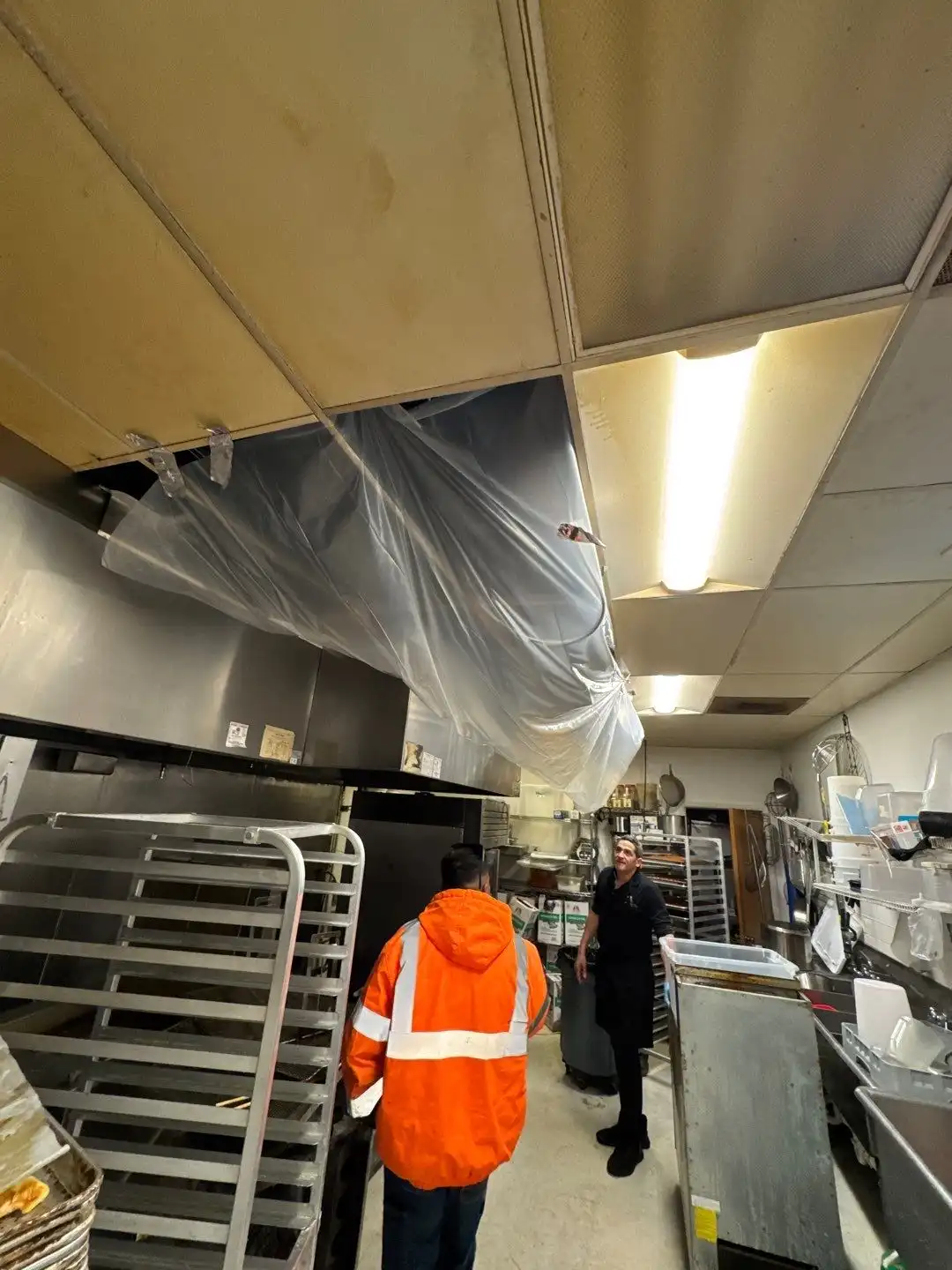
Problem: You cannot tell how bad the leak actually is
Water on a drop ceiling looks the same whether it came from a pinhole in a TPO seam or a fully compromised section of insulation board. Without diagnostic experience, owners either panic and overspend or underreact and let damage spread into walls, electrical, and stock.
Solution: Phone triage, then on site severity assessment
Before a truck rolls, we ask targeted questions. Where is the water showing? How fast is it accumulating? What is the roof type and approximate age? Is the building occupied? That conversation tells us whether you need an immediate tarping crew or a scheduled inspection. on site, we use moisture meters and infrared scanning to map saturation across the membrane and insulation, which is the same approach detailed in our piece on moisture mapping with thermal imaging. That data drives the repair scope and the insurance claim.
The phone conversation also helps us pre stage materials. If you describe a TPO roof with a seam separation near a rooftop unit, the truck arrives loaded with the right membrane, primer, and termination bar rather than making a second trip. If you mention a built up roof with bubbling, we bring different materials entirely. That preparation cuts hours off the stabilization timeline and reduces the amount of water that enters the building before the patch goes down.
Problem: Interior water damage is being ignored while the roof gets attention
Roofing crews stop the leak and leave. Meanwhile saturated ceiling tile, insulation, drywall, and flooring sit wet. Within 48 hours, microbial growth begins, which is exactly the window covered in detail on how fast mold grows after water damage.
Problem: You do not know what emergency work should actually cost
Pricing varies wildly because the work itself varies. A single membrane puncture is not the same job as flashing failure across a 200 foot parapet. Owners get burned when they accept a flat fee without understanding the scope.
Problem: The insurance claim is getting complicated
Adjusters want photos, moisture readings, and a clear delineation between storm damage and pre existing wear. Without proper documentation from day one, claims get partially denied or undervalued.
Problem: You are not sure if the contractor is being straight with you
Roofing has a reputation for upselling, especially during emergencies when owners feel cornered. The pressure to approve large scopes while water is still coming in creates bad decisions.
Solution: Document everything from the first visit
Our crews photograph the affected areas before and after stabilization, log moisture readings, and provide written scope documentation you can hand directly to your adjuster. For property owners weighing whether the damage justifies a full commercial roof replacement versus targeted repair, we provide both scopes so the decision is yours, informed by actual roof condition data rather than sales pressure.
When adjusters request supplemental information weeks after the initial visit, the documentation is already on file. We can pull date stamped photos, infrared scan results, and the original scope notes without scrambling. That responsiveness often determines whether a supplemental claim gets approved or rejected on a technicality.
Solution: Coordinate roof stabilization with interior mitigation
Because Yorktown Commercial Roofing handles both the structural roof work and the water damage restoration side, we coordinate dry out the same visit when possible. Wet ceiling tile gets removed. Insulation is pulled and bagged. Air movers and dehumidifiers go in if the affected area justifies it. Documenting interior damage with the roof event also strengthens your insurance position.
Coordinating both trades under one company also eliminates the finger pointing that happens when a separate roofer and restoration vendor each blame the other for missed steps. One project manager owns the entire event, from the first tarp to the final moisture reading on the drywall. That single point of accountability matters when your tenants are asking when they can reopen or when production can resume.
Solution: Stop the water first, scope the permanent fix second
Emergency response is not the same as full repair. The first priority is dry in: shrink wrap tarping, peel and stick patches on membrane punctures, sealant on flashing failures, or temporary patches on metal panel seams. These hold for days to weeks, which buys time to get accurate quotes and order materials without compounding interior losses. We separate the emergency invoice from the permanent repair quote so you can see exactly what stabilization cost versus what restoration will cost.
Solution: Understand the realistic ranges before you sign
Here are typical emergency stabilization costs we see across Yorktown commercial properties. These are stabilization numbers, not full replacement figures, and they reflect labor plus materials for getting the building watertight enough to plan the permanent repair.
- Single membrane puncture patch: $350 to $900
- Flashing or pipe boot repair: $600 to $1,800
- Tarping a small to mid section: $1,200 to $3,500
- Multi area dry in with seam work: $2,500 to $6,500
- Storm related full perimeter tarping: $4,000 to $9,000
Ranges reflect typical Central Indiana commercial conditions. Final pricing depends on roof access, building height, substrate condition, and whether crane or lift equipment is required. A single story warehouse with a parapet ladder is a different job from a four story building requiring boom truck staging in a tight parking lot, and the quote will reflect that.
Solution: Honest scoping and free inspections
Inspections and estimates are free. If the repair is small and within your maintenance team's capability, we say so. If the system has reached end of service life and patching is throwing money away, we say that too. If we cannot help, we will tell you directly and refer you to someone who can. The goal on the first visit is a stable building and a clear eyed conversation about what comes next, not a signed contract for the largest possible scope.
Problem: Active intrusion keeps spreading while you wait on quotes
Owners often spend two or three days collecting bids while water continues entering the building. Every hour of intrusion adds to interior damage, raises the chance of mold colonization, and weakens the deck.