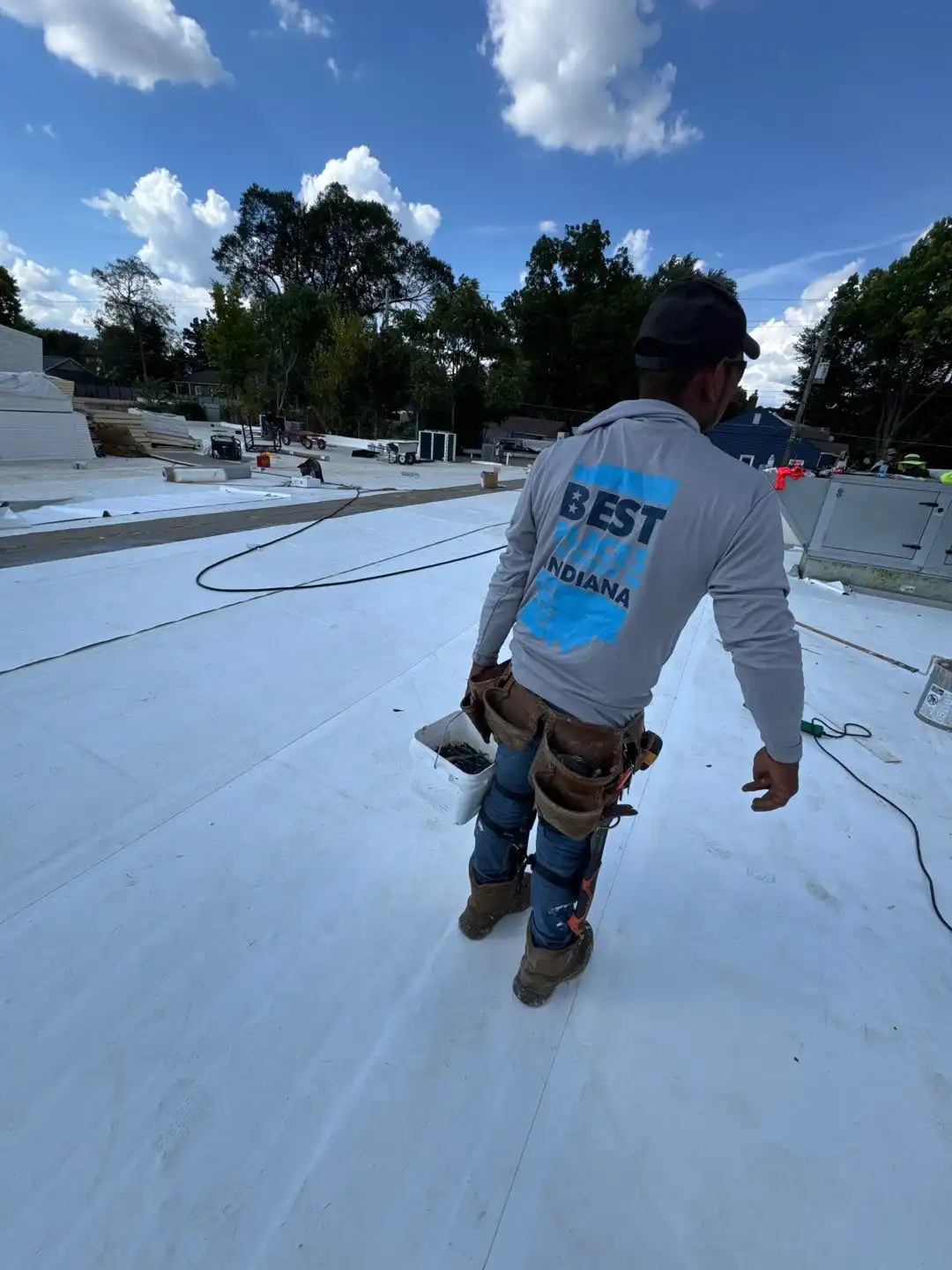
What PVC Roofing Is and How It Works
Before deciding whether PVC is right for your building, it helps to understand what the material actually is and why it performs the way it does. PVC roofing is a specific kind of single ply membrane with characteristics that set it apart from other commercial systems. Here is how it works and what makes it dependable on a Yorktown commercial roof.
A Single-Ply Thermoplastic Membrane
PVC roofing is a single ply membrane, meaning the roof is covered by one layer of engineered material rather than the multiple layers of older built up systems. It is a thermoplastic, which means it can be softened with heat and will re bond to itself, a property that becomes important at the seams. The membrane is manufactured in large sheets and rolled out across the roof, creating a continuous protective surface. For a Yorktown building, this single ply approach means a lighter roof, faster installation, and a surface engineered specifically to keep water out. The thermoplastic nature is the foundation of what makes PVC both strong and repairable.
Heat-Welded Seams That Fuse Together
The defining feature of PVC roofing is how its seams are joined. Instead of glue or tape, adjacent sheets are heat welded, the edges are melted and pressed so they fuse into a single continuous piece of material. A properly welded seam is essentially as strong as the membrane itself, and it stays watertight because there is no adhesive to dry out or fail over time. This is a major reason PVC roofs resist leaks so well. For a Yorktown commercial building, those welded seams are the difference between a roof that holds for decades and one that develops leaks where the sheets meet. The welding is also why installer skill matters so much.
Reinforced for Strength
Most commercial PVC membranes include a reinforcing layer, often a polyester scrim, embedded within the material. This reinforcement gives the membrane added tensile strength and resistance to tearing and puncture, which matters on a roof that takes foot traffic and the occasional dropped tool. The reinforcement helps the membrane hold its shape and stand up to the stresses of weather and building movement. For a Yorktown business, that reinforced construction translates into a roof that resists the everyday wear that would damage a weaker material. It is part of why PVC is trusted on demanding commercial buildings rather than just simple structures, since it can take real punishment.
Built for Flat and Low-Slope Roofs
PVC roofing is designed for the flat and low slope roofs common on commercial buildings, where water tends to sit rather than run off quickly. The membrane and its welded seams create a continuous waterproof surface well suited to those conditions, where a system that resists standing water is essential. Pitched residential roofs use shingles for a reason, and flat commercial roofs use membranes like PVC for the same reason, the material fits the application. For a Yorktown commercial building with a flat or gently sloped roof, PVC provides the kind of watertight surface that geometry demands, holding up where water lingers and weather works on every seam.
Reflective by Design
Many PVC roofs come in white or light colors with a reflective surface that bounces sunlight away rather than absorbing it. This reflectivity can reduce the heat the roof transfers into the building, easing the load on cooling systems during hot weather. For a Yorktown building running air conditioning through long, warm summers, a reflective roof can contribute to lower energy use. The cool roof quality is built into the membrane rather than added as an afterthought, so it works for the life of the roof. This combination of waterproofing and reflectivity is part of what makes PVC an efficient choice for commercial buildings focused on operating costs.
A Proven Commercial System
PVC roofing has been protecting commercial buildings for decades and has a long track record across many building types, far from new or experimental. That history means its performance is well understood, its installation methods are refined, and its long term behavior is proven rather than theoretical. For a Yorktown owner making a significant investment, that maturity matters, since you are choosing a system with a demonstrated record rather than gambling on something unproven. Yorktown Commercial Roofing installs PVC because it has earned its reputation on real buildings over many years, and we have seen firsthand how well a properly installed PVC roof holds up across the seasons in our area.
A System Engineered to Keep Water Out
PVC roofing combines a reinforced single ply membrane, heat welded seams that fuse into one continuous surface, and a reflective finish, all engineered for the flat and low slope roofs commercial buildings use. Understanding these basics explains why PVC resists leaks, handles abuse, and lasts. It is a proven system with a clear logic behind its performance, which is why so many Yorktown businesses rely on it.
One thing worth emphasizing about PVC roofing is how much its performance depends on the welding being done correctly, which is why the choice of contractor matters as much as the choice of material. A Yorktown building owner can buy the best membrane available, but if the seams are not welded properly, the roof will leak where the sheets meet, and the quality of the material is wasted. This is the central reason to insist on an experienced PVC installer rather than the lowest bidder with no track record. Yorktown Commercial Roofing brings crews trained specifically in PVC welding, because we have seen how this single step separates a roof that lasts for decades from one that becomes a recurring problem.
See if PVC Fits Your Building
Curious whether PVC roofing is right for your Yorktown commercial building? Call Yorktown Commercial Roofing at (765) 676-3491 for a free inspection and an honest assessment. We will look at your roof, explain your options, and help you decide whether PVC or another system makes the most sense for you.